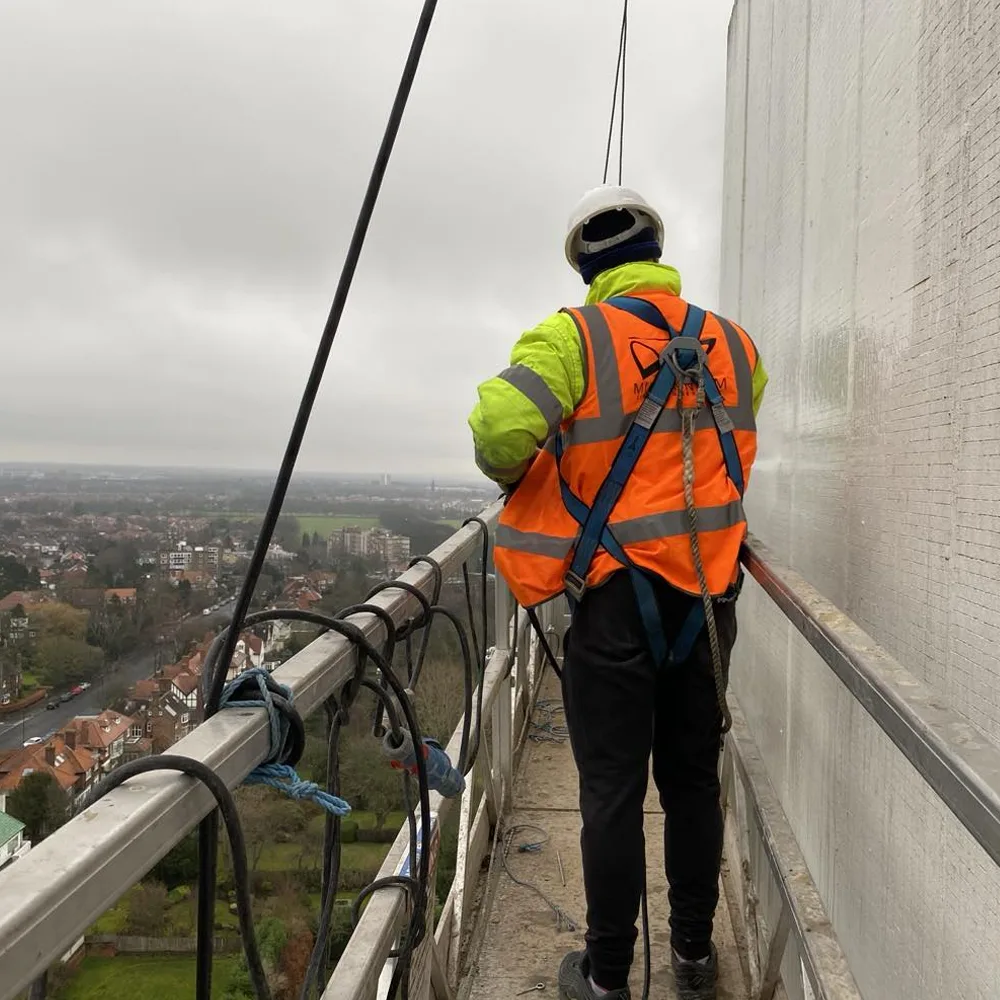
Roof, Gutter and Cladding Cleaning in the North East
We clean suitable commercial roofs, gutters and cladding, with the method planned around the building and access. Based in Jarrow, Tyne & Wear, serving the North East, we agree the cleaning scope and schedule with you before work starts.
Book a free site survey
What’s included
- Gutter debris removal
- Roof cleaning on suitable surfaces
- External cladding cleaning
- Assessment of access and work areas
- An agreed scope before cleaning starts
Roofline cleaning for commercial and industrial buildings
Commercial roofs, gutters and cladding need a cleaning plan that recognises their condition and the difficulty of reaching them. Leaves, debris and surface build-up can be visible from the ground, but the safest method cannot be decided from appearance alone. Millennium Cleaning Services assesses roof, gutter and cladding cleaning across the North East from our Jarrow base.
We start by discussing the building, known defects and the areas requiring attention. A blocked gutter, a dirty roof covering and marked cladding are different tasks with different limitations. A free site survey helps establish what can be accessed and which cleaning methods may be appropriate. Cleaning is not presented as a substitute for repairs or a guarantee against future water ingress.
Defining the roof, gutter and cladding scope
The proposal should identify each part of the building included. We discuss the materials, available access information and any restrictions before confirming the work.
Gutter debris and accessible drainage points
Leaves and other deposits can collect along roof drainage routes. We assess the gutter layout, height and access before agreeing debris removal. Downpipes, outlets and concealed sections may introduce separate limitations. The quote should explain which parts can be cleaned and what cannot be inspected or reached, rather than imply that the whole drainage system has been repaired.
Suitable roof surfaces
A roof covering must be assessed for its material and condition before any cleaning approach is chosen. Fragile areas, rooflights, coatings and previous repairs can restrict the task. We do not assume that walking on a roof or pressure washing it is appropriate. Unknown materials and damaged surfaces require further consideration before a method can be accepted.
External cladding and facade finishes
Cladding cleaning needs attention to panel coatings, joints, adjacent glazing and possible routes for water ingress. We discuss existing damage and the likely result on weathered surfaces. A test may be appropriate where compatibility is uncertain. Cleaning cannot restore a failed coating or repair defective seals, and those limitations should be clear from the outset.
Access planning before cleaning begins
Building height is only part of the access assessment. We also consider the ground around the premises, equipment routes, nearby vehicles and overhead obstructions. The working position must allow the task to be carried out without exposing occupants or passers-by to falling debris or cleaning materials. Where access cannot be established suitably, the scope needs to change.
Our confirmed credentials include IPAF-certified access operatives and NEBOSH-trained supervision. We agree the proposed access method and working areas with the site contact. Any information you hold about fragile materials, roof condition or access restrictions is important during the survey. Cleaning is planned around the building as it exists, not a presumed safe roof surface.
Protecting the site and handling removed material
Roofline work can affect entrances, paths, loading bays and parking areas below. We discuss barriers, vehicle relocation and how normal activity will be separated from the cleaning. Debris should be controlled and collected rather than simply moved from the gutter onto another part of the premises. Drainage and disposal arrangements are considered as part of the work plan.
For washing tasks, runoff and the sensitivity of nearby surfaces also matter. Doors, vents and stock may require protection, while weather conditions can affect suitability on the planned day. We explain any conditions that could change the sequence or timing. Your site procedures and the needs of neighbouring occupiers should be identified before the cleaning is scheduled.
Cleaning and building maintenance are different responsibilities
A clean may reveal a damaged joint, corroded section or another visible concern. We can bring observations to your attention, but a cleaning visit is not a structural survey or a diagnosis of every leak. Known damage should be disclosed before work starts so that it can be considered in the method. Repairs need their own competent assessment.
Similarly, removing debris does not prevent future accumulation or correct an undersized or defective drainage arrangement. We can discuss repeat cleaning according to the building's surroundings and the rate of build-up. Trees, exposure and site activity can influence that frequency. The programme should be reviewed when the roof or drainage is altered.
Sharing existing building information
If you hold roof plans, access guidance or records of previous repairs, share the relevant information during the enquiry. Identify rooflights, fragile materials and areas already known to be damaged. We also need to understand whether neighbouring occupiers control any part of the working space. A gutter may run above a shared path or a cladding elevation may face another property. Those arrangements affect permission, barriers and equipment placement. Before attendance, tell us about new leaks, alterations or changes to the yard layout so that the proposed method can be reviewed against the conditions that will actually be encountered.
Preparing for a free roofline cleaning survey
Useful information includes photographs, the building's approximate height, known roof materials and details of previous problems. Tell us whether the work concerns gutters, the roof covering, cladding or a combination. Access through gates, restrictions on the yard and the location of busy entrances also help define what can be done and when.
Millennium Cleaning Services has traded since 2014, with Mark bringing 20+ years in the cleaning sector. We hold £10M public liability insurance. Call 0191 468 3228 or book a free site survey to discuss roof, gutter and cladding cleaning for your North East premises. The resulting proposal identifies the cleaning tasks, access assumptions and any exclusions before work is agreed.
Frequently asked questions
Can you clean every roof type?
No universal method is suitable. We assess the material, condition, fragile areas and access before deciding whether the proposed cleaning can be undertaken.
Do you remove gutter debris?
We can scope debris removal from accessible gutters. The quote identifies the sections included and any limitations around outlets, downpipes or concealed areas.
Is cladding cleaning available?
Yes, subject to assessment of the finish, joints, condition and access. Cleaning does not repair failed coatings or damaged seals.
Will you walk on the roof?
That is not assumed. Access is assessed for the specific building, and the method must account for roof condition and any fragile materials.
Does cleaning include roof repairs?
No. Repairs and technical inspection are separate from cleaning. Tell us about known damage or leaks before the survey.
Can the building remain in use?
The answer depends on access and the area below the work. We discuss barriers, entrance restrictions and vehicle movements with your site contact.
Can roofline cleaning be planned regularly?
Yes. Frequency can be discussed according to debris build-up, surrounding trees, exposure and your maintenance needs rather than a fixed interval for every building.
How do I arrange a roof and gutter survey?
Book a free site survey through our contact page or call 0191 468 3228. Include the building location, affected areas and any known access or roof-condition concerns.
Book a free site survey
Tell us your site address, what needs cleaning and your preferred schedule.