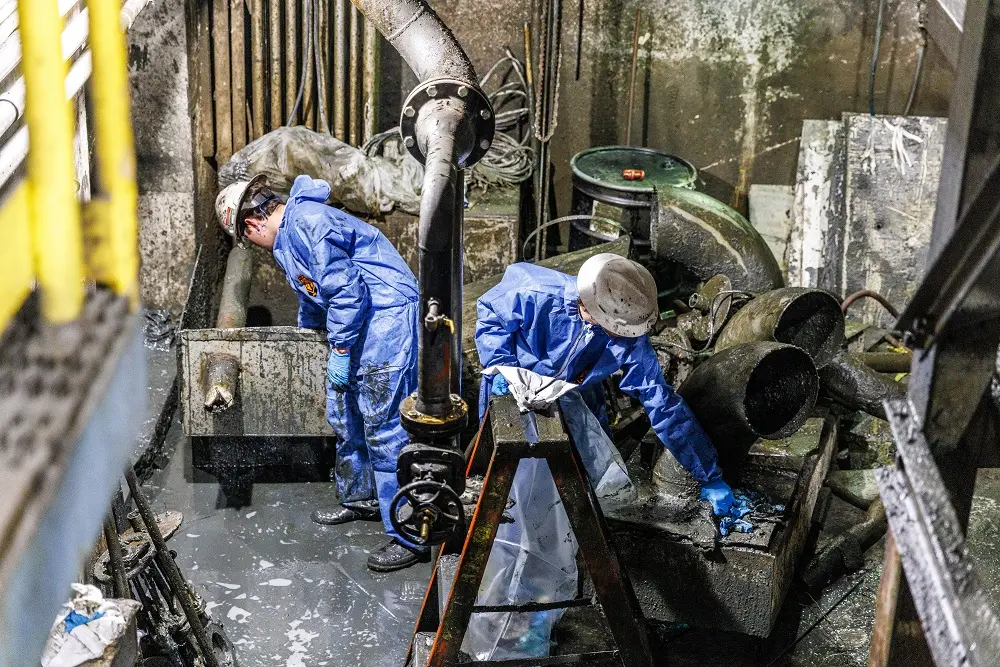
Industrial Tank Cleaning in the North East
We scope cleaning for industrial tanks and storage vessels around their contents, condition and access requirements. Based in Jarrow, Tyne & Wear, serving the North East, we agree the cleaning scope and schedule with you before work starts.
What’s included
- Review of tank contents and cleaning requirements
- Cleaning of agreed internal surfaces
- Residue removal to the agreed scope
- Planning for isolation, access and waste handling
- Trained operatives and a site-specific work plan
Tank cleaning starts with the contents and condition
Industrial tanks and storage vessels cannot be assessed on size alone. Previous contents, residues, internal features and the available access all influence whether a cleaning task can be undertaken and how it should be planned. Millennium Cleaning Services scopes industrial tank cleaning across the North East from our Jarrow base, with an assessment before the method or price is confirmed.
We ask the site operator to explain the purpose of the tank, what it has held and the intended use after cleaning. Product information, available drawings and existing site procedures help establish the brief. An unknown residue should never be treated as a routine cleaning deposit. Where information is missing, that uncertainty needs to be resolved before a suitable cleaning plan can be agreed.
Defining the vessel cleaning scope
A tank-cleaning proposal should describe the surfaces and residues involved, not simply state that a tank will be cleaned. We discuss the required result with the person responsible for the vessel and its return to service.
Storage tanks and accessible internal surfaces
The assessment considers the vessel material, condition, openings and any internal obstructions. We identify the surfaces proposed for cleaning and discuss how the work could be reached without assuming entry is necessary or acceptable. Access restrictions may limit the scope or require additional arrangements before a task can be accepted.
Residue removal and surface cleaning
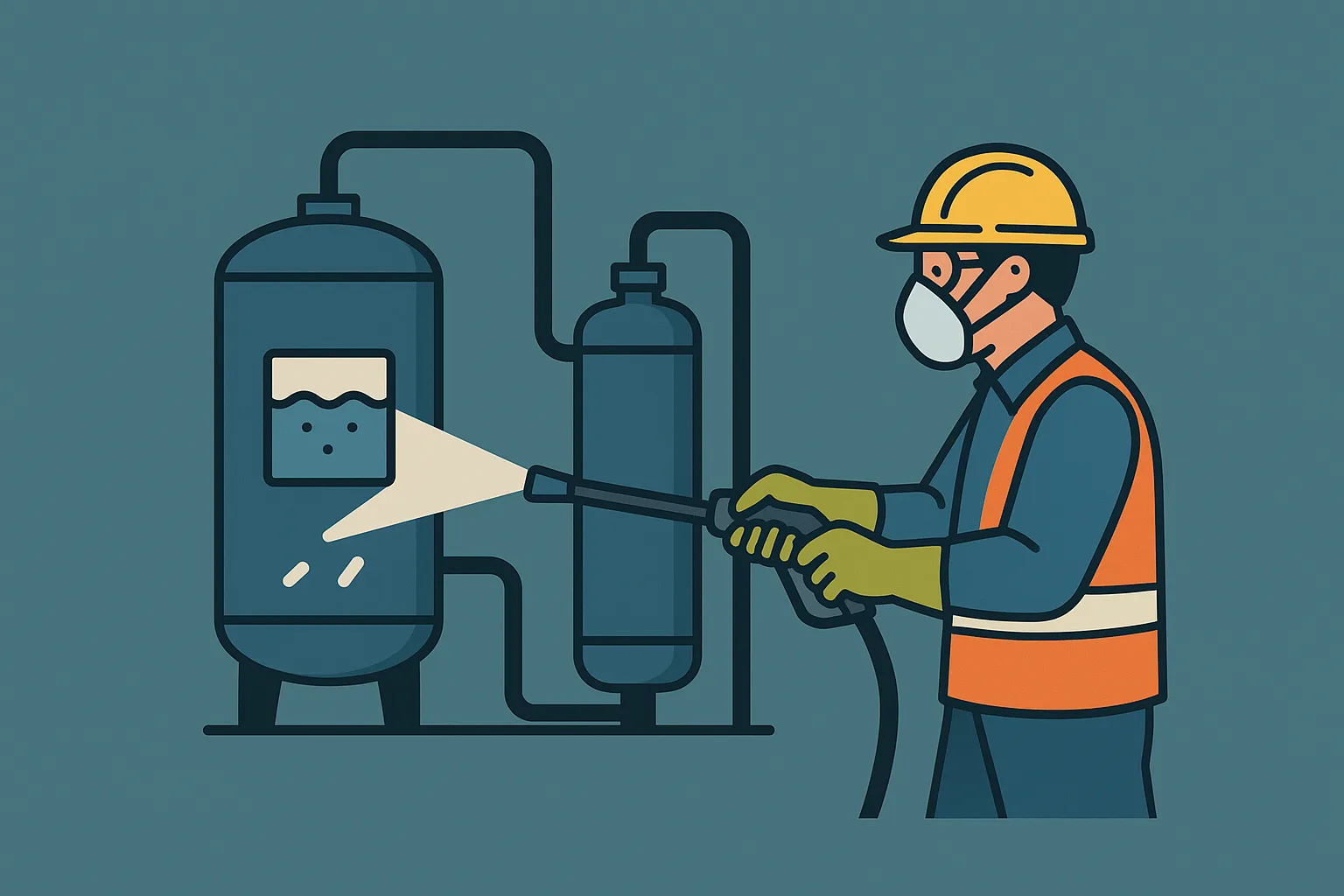
Loose material, settled deposits and adhered residues may require different approaches. The method must be compatible with both the substance and the tank lining. We discuss the likely results, any risk of damage and the handling of collected material. Cleaning cannot repair corrosion, a damaged coating or a leaking vessel, and those defects need separate attention.
Process vessels and planned maintenance
Where cleaning forms part of a maintenance period, the sequence should be coordinated with the site team and any other contractors. We clarify what must happen before cleaning starts and what inspection or maintenance follows it. Internal dismantling, plant repairs and technical approval for operation are not assumed to be cleaning responsibilities.
Isolation, access and the decision about entry
Tank work needs careful consideration of connections, moving equipment, stored energy and the potential presence of hazardous substances. Your site team identifies the necessary isolation arrangements and the people responsible for them. The cleaning plan must be compatible with your permit and control procedures. We do not begin on the assumption that an empty-looking vessel is safe.
If the proposed work could involve a confined space, it requires a specific assessment of whether entry can be avoided and what provision would be necessary if it cannot. Suitable competence, monitoring, permits and rescue arrangements must be established for the actual task before acceptance. This page is not a claim that every vessel or entry scenario is within our scope. Tell us about known restrictions at the first enquiry.
Planning water, residues and waste handling
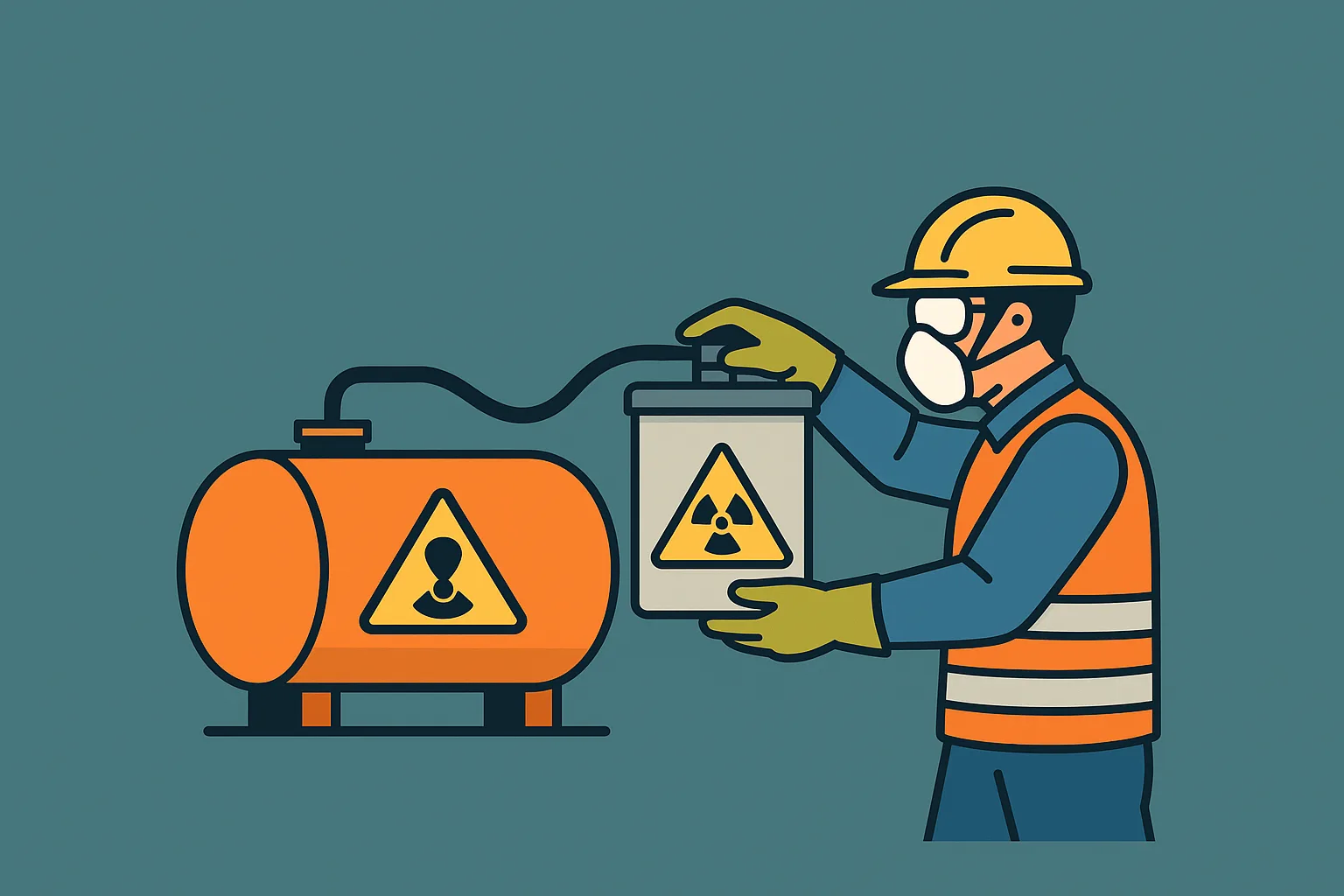
Cleaning can generate liquid and solid residues that cannot simply be discharged into the nearest drain. We discuss the nature of those materials, containment requirements and the proposed disposal route with the site operator. Existing contents and any material removed before our attendance should be identified separately. Responsibilities for removal, storage and disposal need to be explicit in the agreed scope.
Water availability, power supplies, working space and access for equipment can also affect the method. Adjacent plant may need protection, and equipment routes may pass through operating areas. These practical details are easier to resolve during a site survey than after a maintenance window has started. Where third-party arrangements are needed, we identify them before the cleaning schedule is confirmed.
Agreeing the cleaning result and return-to-use arrangements
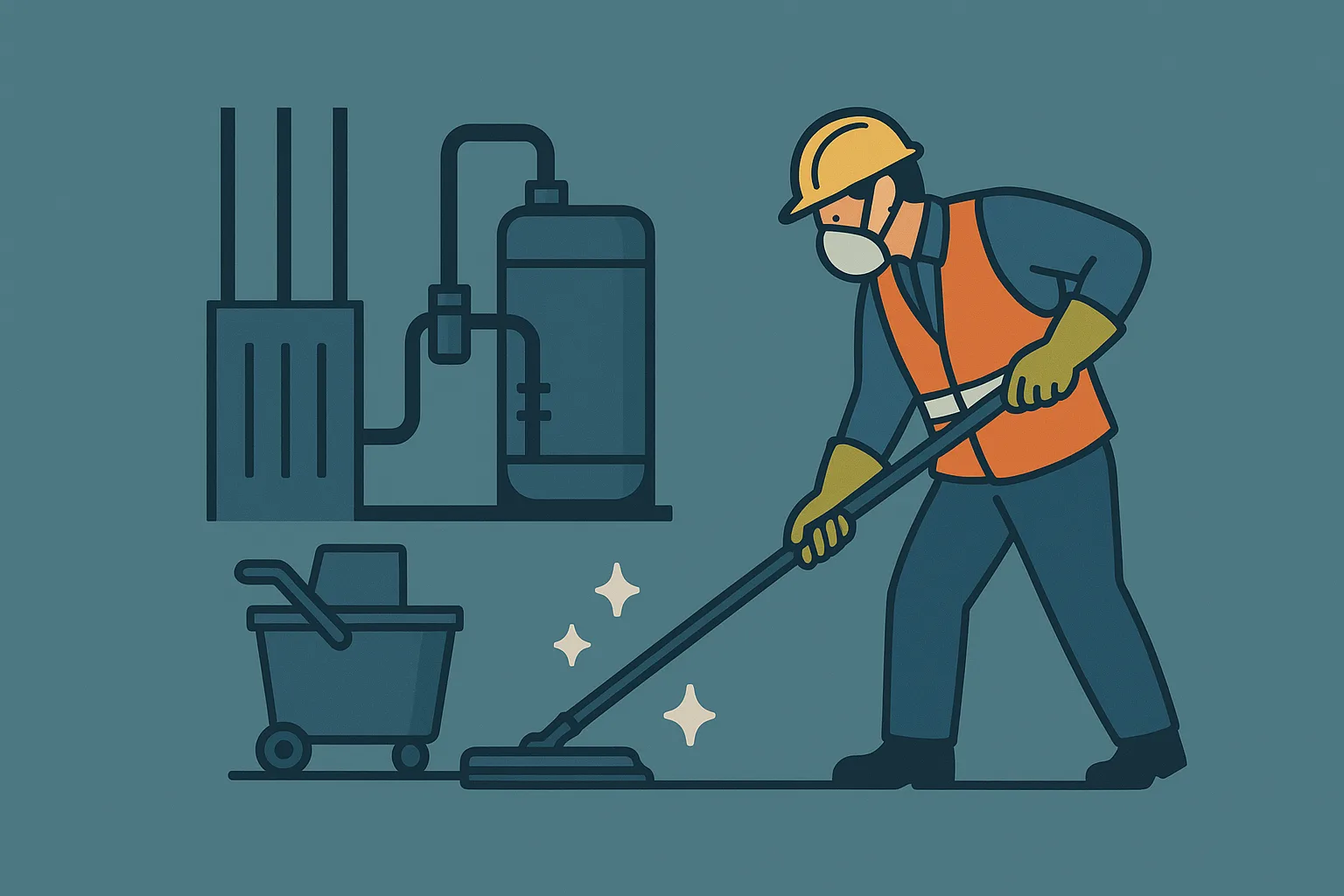
Different tanks need different outcomes. Removing accumulated residue is not the same as preparing a surface for inspection, changing a stored product or meeting a technical process specification. Explain the intended result and any acceptance criteria in advance. We assess the cleaning requirement against the information provided and explain limitations rather than promising a universal standard for every tank.
The person responsible for the vessel should determine any testing, inspection or technical checks required before it is used again. A cleaning visit does not replace those decisions. If the work exposes damaged material or inaccessible areas, the handover should identify them. Additional cleaning or investigation can then be considered without presenting a partly accessible vessel as fully treated.
Information to gather before the survey
If available, gather the vessel identification, drawings, lining information and records of the material previously stored. Explain whether connected plant will remain operational nearby and which people control the isolation arrangements. We also need to understand how residues could be collected and where equipment can be positioned. These details help distinguish a practical cleaning task from one that still has unresolved safety or technical questions. If the intended use of the tank changes during planning, tell us before work is confirmed because the required cleaning outcome may also change.
A site-specific proposal rather than a standard tank price
Pricing depends on the vessel, the residue, the access and the controls needed to complete the agreed work. A photograph can support the initial discussion but may not reveal internal conditions or the handling requirements for previous contents. A free site survey helps establish what information is available and which questions must be answered before a proposal can be prepared.
Millennium Cleaning Services has traded since 2014, with Mark bringing 20+ years in the cleaning sector. Our confirmed credentials include NEBOSH-trained supervision and £10M public liability insurance. To discuss an industrial tank or storage vessel, call 0191 468 3228 or book a free site survey. Please include the location, previous contents and known access restrictions in your enquiry.
Frequently asked questions
What details do you need about a tank?
We need its purpose, previous contents, approximate size, construction, condition, access details and the required cleaning result. Available drawings and product information are useful.
Can you clean every type of industrial tank?
No universal suitability is assumed. We assess the contents, condition, access and controls required before confirming whether the proposed work is within scope.
Will someone need to enter the tank?
Not necessarily. Avoiding entry is considered during assessment. Any proposed confined-space work requires task-specific arrangements before it can be accepted.
Who arranges isolation?
Isolation responsibilities are agreed with the site operator. Your site team must identify connections, equipment and stored energy that need to be controlled.
Does the quote include disposal of residues?
The proposal identifies what residue handling and disposal arrangements are included. Material types, containment and responsibilities are discussed before work starts.
Can tank cleaning be planned around maintenance?
Yes. Share the maintenance sequence and access requirements so that cleaning can be considered alongside isolation, inspection and other contractors' activities.
Does cleaning certify a tank for use?
No. Any technical inspection, testing or approval needed before returning the vessel to service remains a separate requirement for the responsible site team.
How do I request a tank-cleaning assessment?
Call 0191 468 3228 or book a free site survey through our contact page. Include the previous contents and known hazards so we can begin with the right information.
Book a free site survey
Tell us your site address, what needs cleaning and your preferred schedule.